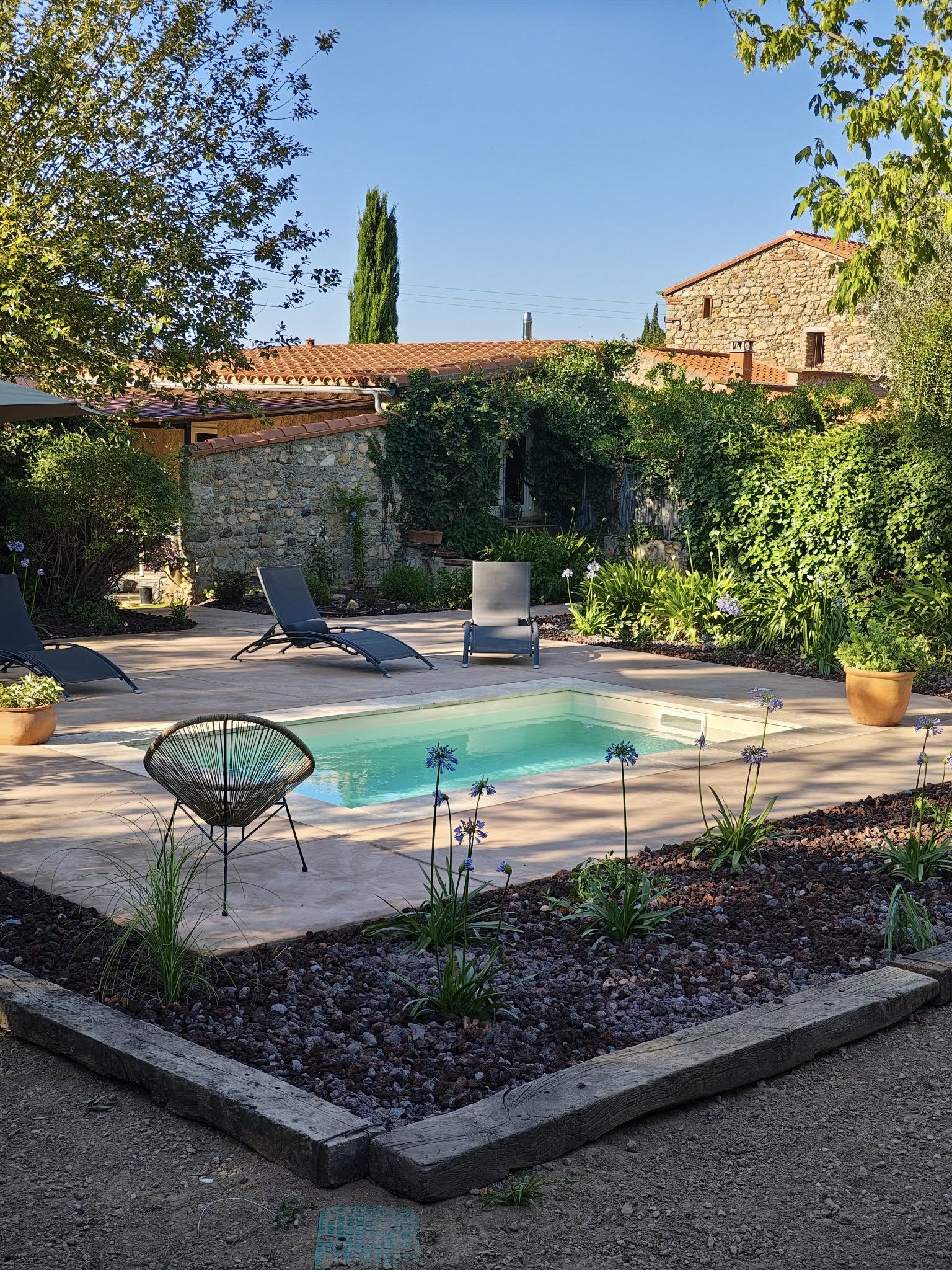
Les Trois petits pois
Giteno reviews
From €80/night1 - 6 guests3 nights minimum
Corbère – 66130

PYRÉNÉES-ORIENTALES
Showing 2 of 2 accommodations
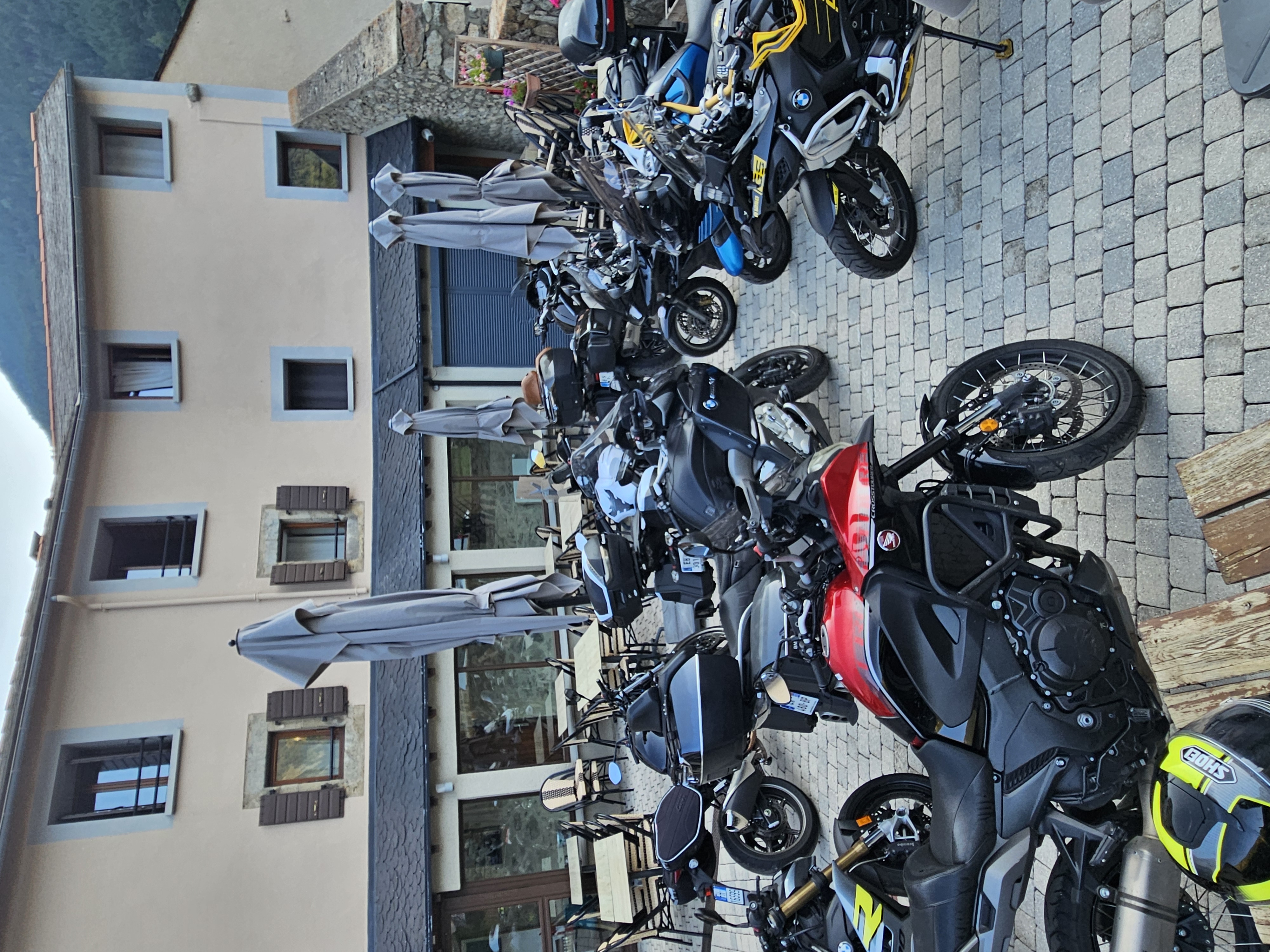
The Bivo Moto community is building the motorcycle accommodation map
Do you know a hotel, guesthouse or campsite suited for motorcycle travelers in this area? Share it and help other riders plan their next road trips.
Recommend an establishmentThe Pyrénées-Orientales allow you to alternate between sea and mountain on the same day, making it a department apart for a motorcycle road trip. From the Canigou massif dominating the Roussillon plain to the Côte Vermeille and its rugged coves, the landscapes change quickly and decisively. The roads of the Conflent climb towards passes such as La Perche and Le Jau, the Galamus gorges impress with their vertical walls, and the Cerdagne opens onto a vast plateau at 1,800m with Font-Romeu, its mountain villages and its yellow train. A radically different atmosphere from the coast less than an hour from Perpignan. On the heritage side, Villefranche-de-Conflent and its Vauban fortifications, the perched villages of Castelnou and Eus, and the abbey of Saint-Martin-du-Canigou are all worth the detour. Not forgetting the Catalan gastronomy: Collioure anchovies, Banyuls wines and cargolade. All of this in a distinctly Catalan atmosphere, just a stone's throw from Spain.
Relief
From the coast to the Cerdagne summits
Marked routes
Passes, gorges and coast: Jau, Puymorens, Côte Vermeille
Ideal for
Cross-border road trip: France, Spain and Andorra within reach
The department packs a rare diversity between sea and mountain. On the Côte Vermeille, Collioure charms with its royal castle, its colourful harbour and its lanes that inspired Matisse and Picasso. Further south, Banyuls-sur-Mer and its marine reserve offer diving and swimming in preserved waters. In the mountains, the Pic du Canigou peaks at 2,784 metres and remains the sacred mountain of the Catalans, visible from Perpignan. The medieval villages of Villefranche-de-Conflent, Eus, Castelnou and Mosset are listed among the Most Beautiful Villages in France. The abbey of Saint-Martin-du-Canigou, perched on a mountainside, impresses with its Romanesque architecture. The Yellow Train links Villefranche to the Cerdagne through spectacular landscapes. In the Cerdagne, the plateau at 1,800 metres altitude around Font-Romeu, Saillagouse and the high-altitude lakes such as Les Bouillouses offers a unique high-mountain atmosphere. The gorges of Galamus and Carança offer vertiginous passages. On the cultural side, Perpignan with its Palace of the Kings of Majorca and the Castillet, the Cathar castles of Peyrepertuse and Quéribus, the fortress of Salses and the organ pipes of Ille-sur-Têt round out a particularly rich heritage.
Mountain lake of 146 hectares at the foot of the Carlit massif, with 60 km of marked trails.
Protected marine zone with 1,200 animal species and 500 plant species, a paradise for divers and snorkellers.
Medieval village listed among the Most Beautiful Villages in France, dominated by its castle and cobbled lanes.
Listed site between Port-Vendres and Banyuls, a former Nobel factory transformed into a preserved natural area.
Spectacular geological formations shaped by erosion, a landscape reminiscent of the American West.
Catalan capital with the Palace of the Kings of Majorca, the Castillet and panoramic views over the Canigou.
Spanish fortress built between 1497 and 1503, a unique example of transitional military architecture.
Spectacular hike with footbridges and cables, a path carved into the rock at the wild heart of the Pyrenees.
Côte Vermeille village with a royal castle, the Notre-Dame-des-Anges church and a colourful harbour that inspired the Fauvist painters.
Iconic summit at 2,784m, the sacred mountain of the Catalans with panoramic views over the sea and the Pyrenees.
Town fortified by Vauban, listed as UNESCO heritage, with medieval ramparts and Fort Libéria accessible via 799 steps.
Romanesque masterpiece perched at 1,100m altitude, accessible on foot, overlooking the Cady valley.
The department offers an exceptional network of winding roads between the Mediterranean and the high mountains. The D618 crossing the Galamus gorges is a narrow and vertiginous passage, closed to campervans, offering unique sensations over 2 kilometres. The Canigou circuit via the D116 from Prades allows you to skirt the massif passing through Villefranche-de-Conflent, Vernet-les-Bains and Casteil with alpine panoramas. The Pyrenean passes route crosses the department: Col de la Quillane, Col de la Perche, Col Fourtou, Col de Jau, before reaching the Mediterranean at Argelès-sur-Mer or Cerbère. The D115 leads to the Col de Puymorens at 1,915m, gateway to Andorra. The Côte Vermeille between Argelès and Cerbère along the D914 alternates tight bends and sweeping views over the Mediterranean. The Conflent and the Vallespir are packed with small departmental roads such as the D13 towards Mosset or the D618 towards Prats-de-Mollo. To the north, the Corbières offer rolling roads through vineyards and Cathar castles.
From Prades, a winding climb to 1,513m through the forest before opening out onto the Corbières. Descent towards Axat and the Aude gorges for a wild and enclosed finale.
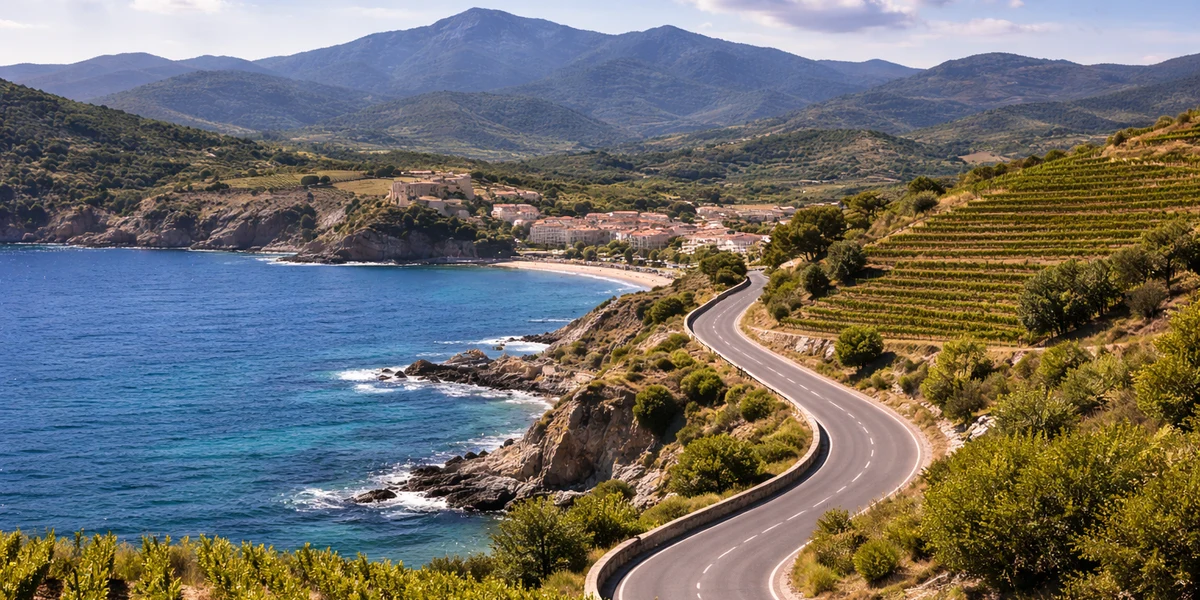
From Collioure to Cerbère, a panoramic road facing the Mediterranean between terraced vineyards and rocky coves. Detours into the Albères massif add a more winding register between scrubland and viewpoints over the Roussillon plain.
From Perpignan, climbing the Têt to Font-Romeu crosses enclosed gorges before opening onto the great Cerdagne plateau at 1,800m. High-altitude light, open horizons and an atmosphere radically different from the coast.
A narrow 2km passage carved into the rock between the Pyrénées-Orientales and the Aude. One of the most impressive stretches in the department, best combined with the Col de Puymorens for a high-mountain loop towards the Ariège.
A tour of the massif via Vernet-les-Bains, Villefranche-de-Conflent and the Carança gorges along the D116 and D27. Pink stone villages, vertiginous gorges and constant views of the iconic Catalan summit.