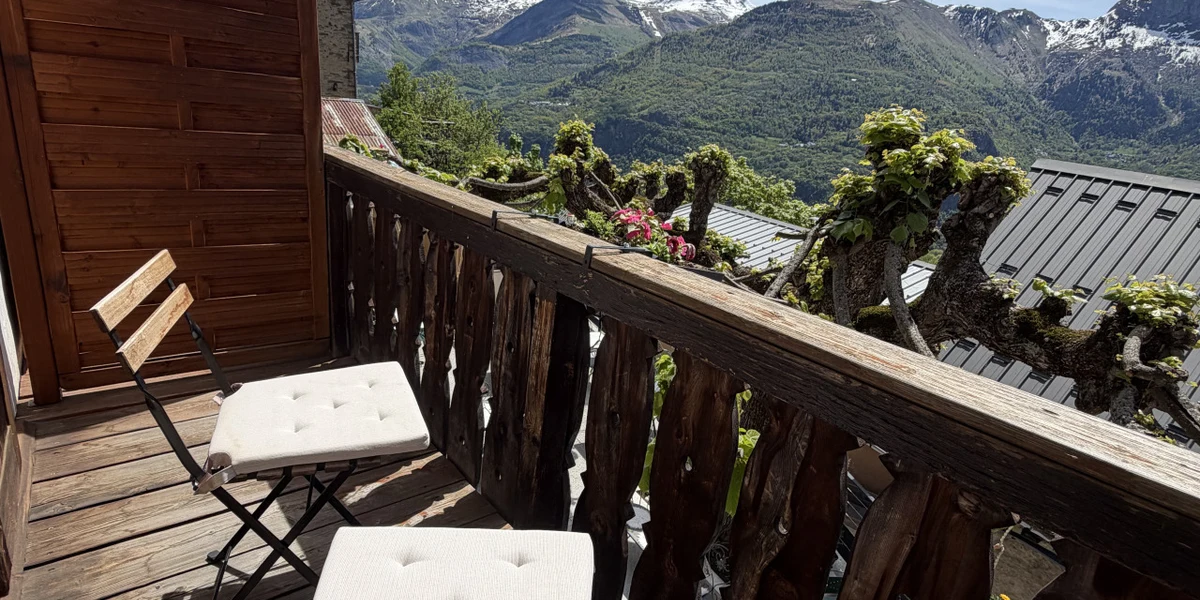
Auberge de la forêt
Hotel5(1 review)
From €80/night1 - 30 guests
Auris en Oisans – 38142

ISÈRE
Showing 1 of 1 accommodation
The Bivo Moto community is building the motorcycle accommodation map
Do you know a hotel, guesthouse or campsite suited for motorcycle travelers in this area? Share it and help other riders plan their next road trips.
Recommend an establishmentIsère is the department with the greatest elevation change in France, from the Rhône at 134 meters all the way up to Pic Lory at over 4,000. Safe to say, any rider who rolls in here is never going to be bored. Between Grenoble tucked into its mountain bowl and the Oisans passes climbing toward the sky, the scenery shifts every twenty minutes. The Vercors unfolds its limestone gorges and plateaus, the Chartreuse hides its forests and monastic silence, and further south the Trièves watches Mont Aiguille thrust its improbable silhouette skyward. The riding season runs from April through October, with a real peak in July and August when the major alpine passes are clear of snow. May-June and September remain the most relaxed months to ride, with lighter traffic on the switchbacks and stunning light across the massifs.
Elevation
134 m to 4,088 m
Legendary passes
20+ alpine cols
Riding season
April to October
Grenoble deserves a stop, if only to ride the cable car up to the Bastille and watch the city set among mountains light up at dusk. Then head into the Oisans to tackle the 21 legendary hairpins of Alpe d'Huez, before dropping back down into the Vercors where Pont-en-Royans clings its colorful houses to the cliffs above the Bourne. The Chartreuse massif casts a special silence around its monastery, birthplace of the famous liqueur whose cellars you can tour in Voiron. Saint-Antoine-l'Abbaye, listed among France's most beautiful villages, is worth the detour for its Gothic abbey church and medieval lanes. The Domaine de Vizille tells the story of the French Revolution set within formal French gardens, while the ancient Roman theater in Vienne hosts the Jazz à Vienne festival every summer. For a nature fix, the Himalayan suspension bridges above Lac de Monteynard are genuinely vertiginous, and Mont Aiguille looms over the Trièves like something out of a postcard. And don't leave without trying the Grenoble walnuts and a proper gratin dauphinois, local specialties you owe yourself.
Panoramic view over the city and its surrounding mountains, reachable by cable car from the historic center.
Legendary Tour de France climb, 14 km and over 1,000 m of elevation gain on numbered switchbacks.
Colorful facades clinging to the cliffs above the Bourne, medieval atmosphere right on the water's edge.
High-altitude lake at nearly 2,000 m with a sweeping view over the Grésivaudan valley and the Chartreuse.
Medieval village listed among France's most beautiful, home to a stunning Gothic abbey church of the Dauphiné.
Two suspension bridges hanging 45 and 85 m above the lake, a spectacular hike around the water.
Roman theater set against the hillside, venue for the Jazz à Vienne festival every summer.
Monastery founded over 900 years ago, tucked deep within the silent forests of the massif.
Castle and grounds where a key episode of the French Revolution unfolded, with an on-site dedicated museum.
Iconic landmark of the Trièves, an isolated summit that towers over a landscape of rolling peaks.
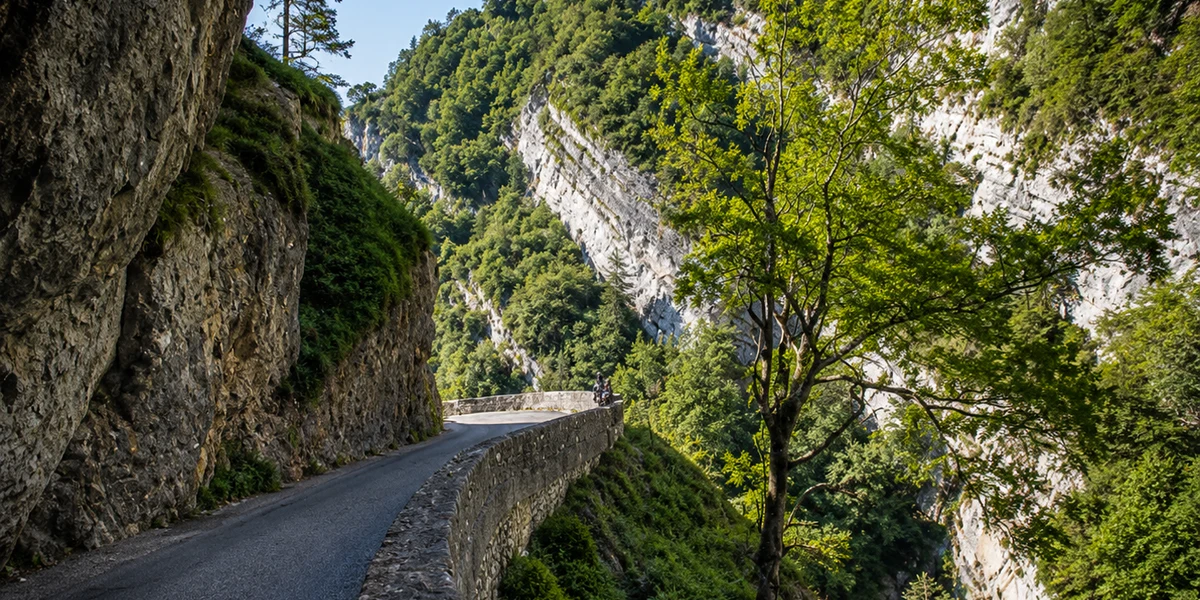
Narrow road threading between limestone cliffs — one of the must-ride passages through the Vercors.
Resort village in the Vercors, a perfect base for exploring the surrounding plateaus.
The longest aging cellars in Europe — tour and tasting of the monks' famous liqueur.
13th-century market halls, ramparts and cobbled lanes at the gateway to the Rhône-side Isère.
Sweeping view down over Grenoble and the valley from the eastern balcony of the Vercors.
Historical site dedicated to the Vercors resistance fighters during World War II.
A charming little spa town nestled in a green valley just outside Grenoble.
Lake Laffrey and its neighboring lakes — a cool and refreshing stop on the Matheysin plateau.
Isère stacks up playground after playground for riders. On the Oisans side, the road climbing from Bourg-d'Oisans toward the Col de la Croix de Fer (D926) and Col du Glandon (D927) delivers tight switchbacks and glacier views, before linking up with the Galibier (D902) and the Lautaret (D1091) for those chasing high-altitude thrills. The ascent of Alpe d'Huez via the D211 remains a classic you've got to do at least once, stopwatch or not. Then swing into the Vercors: the D531 along the Gorges de la Bourne snakes between limestone walls all the way to Pont-en-Royans, and the descent from the Col de Rousset (D518) into neighboring Drôme makes for a crowd-pleasing finale when you're after technical cornering. The Chartreuse massif is perfect for a day loop via the Cols de Porte (D512), du Cucheron and du Granier (D912), through dense forest with glimpses out over the valley. Further south, the Trièves and its Col de la Croix Haute (D1075) open onto quieter roads — just what you need to decompress between back-to-back alpine stages.
Croix de Fer, Glandon, Galibier and Lautaret back to back, with several crossings above 2,000 m elevation.
21 numbered switchbacks over 14 km — the Tour de France's legendary climb, fully rideable by motorcycle.
Tight road carved between the limestone cliffs of the Vercors, leading to the suspended houses of Pont-en-Royans.
Sweeping descent on tight hairpins toward Drôme — a go-to reference among riders who love technical cornering.
Loop via the Cols de Porte, du Cucheron and du Granier, through dark forests with open views over the valley.
Col de la Croix Haute with views over Mont Aiguille — a more laid-back vibe than the big alpine passes.
Road up to Saint-Nizier-du-Moucherotte with a sweeping bird's-eye view over Grenoble and the Grésivaudan.