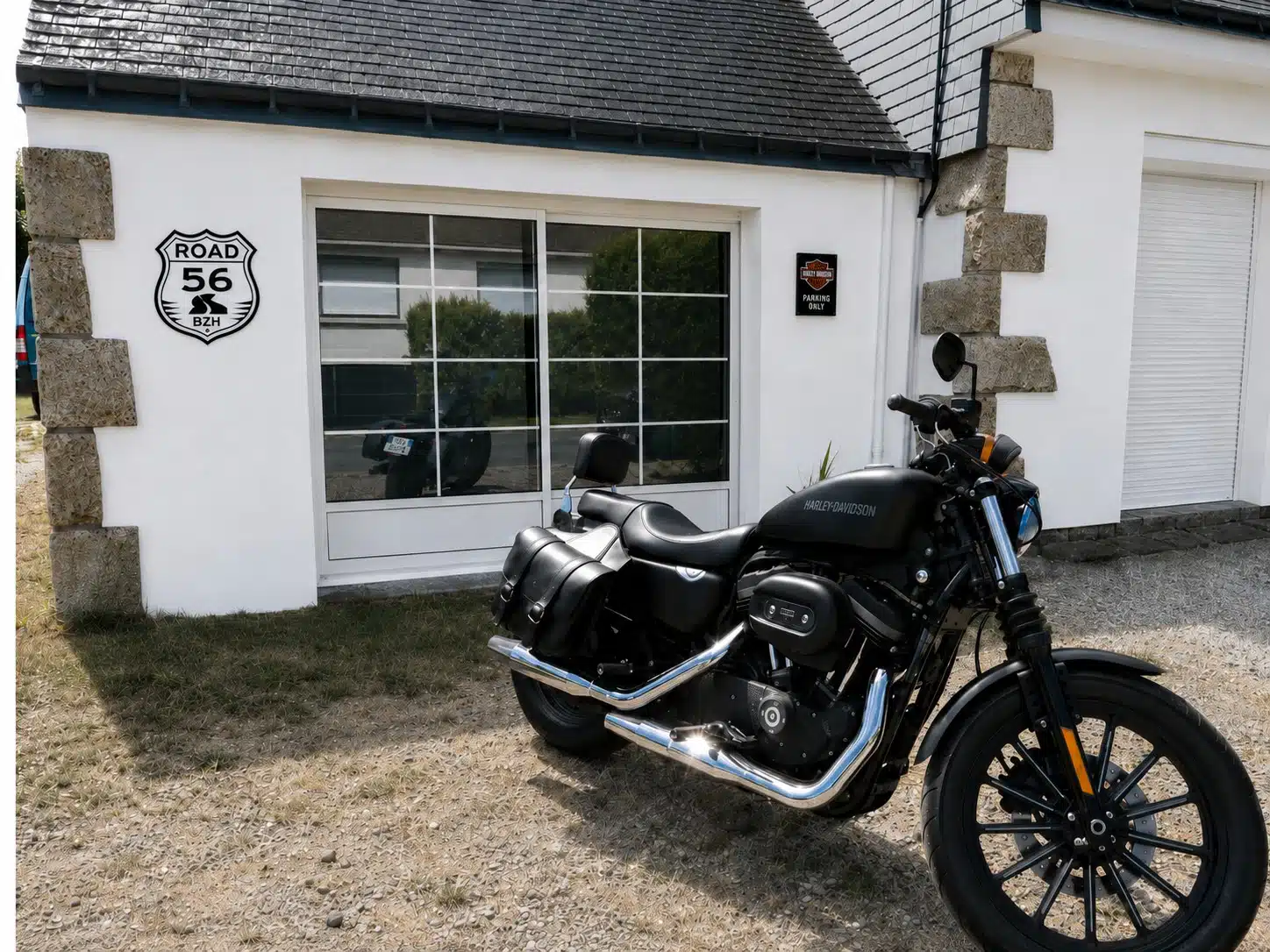
Road 56 BZH : Studio Route 66
B&Bno reviews
From €65/night1 - 4 guests
Sulniac – 56250
MORBIHAN
Showing 1 of 1 accommodation
The Bivo Moto community is building the motorcycle accommodation map
Do you know a hotel, guesthouse or campsite suited for motorcycle travelers in this area? Share it and help other riders plan their next road trips.
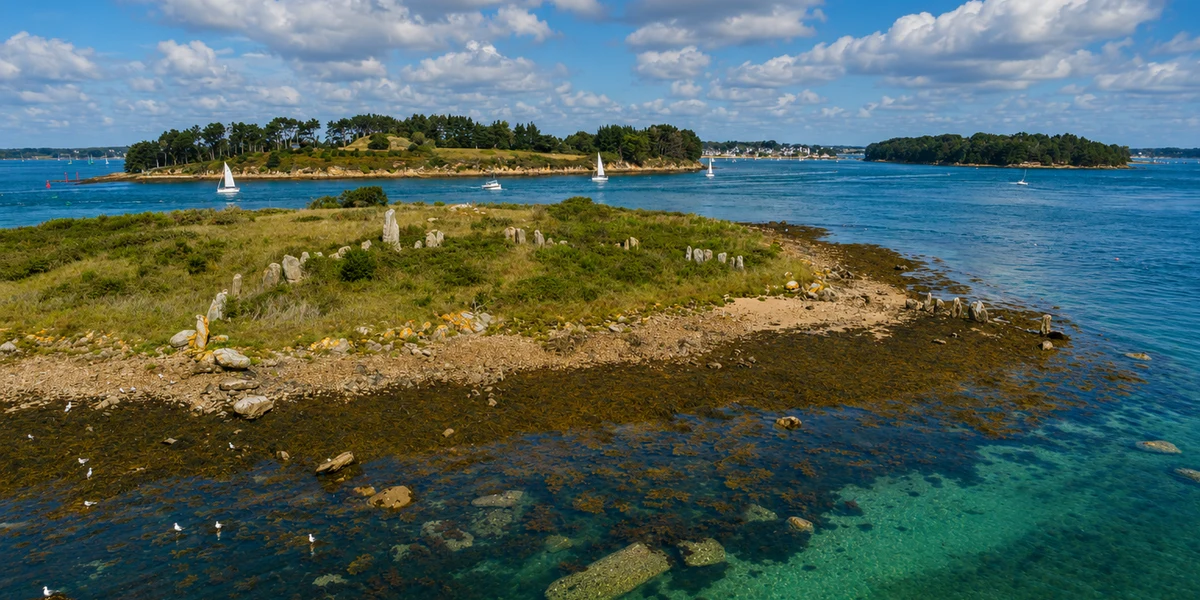
Recommend an establishmentMorbihan is Brittany at its most indecisive — caught between land and sea, and ultimately offering both at once. Here, the bike glides along the gulf dotted with forty islands, traces the Carnac megalith alignments, then blasts toward the Wild Coast of Quiberon where the Atlantic hammers against the rock. The terrain stays gentle, almost flat in places, but the roads know how to keep you on your toes: tight bends on the Rhuys peninsula, pine-lined straightaways toward Locmariaquer, quiet back roads threading through the Landes de Lanvaux. The season stretches from April to October, with peak crowds in July and August on the coast — which is reason enough to ride in May, June, or September instead. Head inland and the whole vibe shifts: forests, chapels, and deep-cut valleys replace the beaches, revealing a more secretive, almost continental side of Morbihan.
Scenery
Gulf, islands, moorlands
Best season
April to October
Islands to explore
Around forty
Morbihan packs a huge chunk of the Breton soul into a single department. Vannes kicks things off with its ramparts and half-timbered houses, before giving way to the gulf and its forty islands — best explored by boat, bike, or kayak. Carnac's megalith alignments, seven thousand years old and still standing, demand your respect. The Quiberon peninsula swings from a sheltered eastern coast to the wind-lashed Wild Coast on the Atlantic side. Offshore, Belle-Île-en-Mer, Île de Groix, and Île-aux-Moines each run at their own pace, mixing cliffs, coves, and coastal trails. The Château de Suscinio tells the story of the Dukes of Brittany, Rochefort-en-Terre charms with its flower-lined lanes, and Lorient rocks every summer to the beat of the Festival Interceltique. On the food front, gulf oysters, buckwheat galettes, kouign-amann, and salted butter caramel make for seriously good pit stops. Between protected marshes, isolated chapels in the Landes de Lanvaux, and canal villages like Malestroit and La Gacilly, Morbihan rewards both the rider in a hurry and the one who's happy to linger.
Ramparts, half-timbered houses, and Saint-Pierre Cathedral in a city with roots going back to the Middle Ages.
An inland sea scattered with around forty islands, best explored by boat, bicycle, or kayak.
Over 3,000 Neolithic standing stones spread across the Ménec, Kermario, and Kerlescan sites.
A medieval village ranked among the most beautiful in France, with cobbled lanes and a 20th-century château.
Atlantic-battered cliffs and the Penthièvre isthmus connecting the peninsula to the mainland.
Brittany's largest island, featuring a Vauban citadel, the Port-Coton needles, and the GR340 coastal trail.
Former residence of the Dukes of Brittany, surrounded by marshes and dunes on the Rhuys peninsula.
An authentic island home to Grands Sables, Europe's only convex beach — genuinely one of a kind.
Nicknamed the pearl of the gulf, car-free, with hydrangeas lining the coastal paths.
Quieter than its neighbor, with the Berno chapel and discreet beaches at the heart of the gulf.
A historic trading port where Benjamin Franklin once landed, with cobbled quays and timber-framed houses.
A seafront city facing the ocean, home to the Keroman fishing port and a major Celtic festival every summer.
A Neolithic burial monument with elaborately engraved slabs, reachable by boat from Larmor-Baden.
530 protected hectares since 1996, with trails and observation hides for migratory birds.
A flower-filled village known for its open-air Photography Festival and artisan atmosphere.
A charming small town straddling the Nantes-to-Brest canal, with half-timbered houses throughout.
A canalized river winding through wooded hills past flower-decked locks — the real inland Brittany.
A wild estuary with powerful currents, quiet harbors, and landscapes that shift with every tide.
Wedged between gulf and ocean, with beaches, coves, and cycling paths south of Vannes.
Tastings at oyster farms, buckwheat galettes, and the legendary salted butter caramel.
In Morbihan, the bike finds its playground between coastal roads and quiet back roads through the hinterland. The D781 links Crac'h to Locmariaquer then Carnac, threading past oyster beds and pine forests before reaching La Trinité-sur-Mer. The D768 runs from Auray toward Plouharnel and Quiberon, throwing in the Penthièvre isthmus with ocean views on both sides simultaneously. On the Rhuys peninsula, the D780 winds between Sarzeau and Arzon, brushing past the Château de Suscinio and the gulf's little coves. Heading inland, the D774 cuts through the Landes de Lanvaux between Vannes and Ploërmel — rolling, wooded terrain that stays nearly deserted even in summer. The Blavet valley, between Pontivy and Hennebont, delivers a twisting riverside ride dotted with locks and villages like Saint-Nicolas-des-Eaux. Further south, the small roads around the Ria d'Étel hide some genuinely unexpected scenery between river and farmland. The N165 serves as the fast backbone for linking these areas without burning time on long transfers.
A coastal road weaving past oyster beds, pine forests, and megaliths via La Trinité-sur-Mer and Locmariaquer.
From Auray to Quiberon via Plouharnel, crossing the Penthièvre isthmus flanked by two seas at once.
From Sarzeau to Arzon, gentle bends, the Château de Suscinio, and alternating views of sea and gulf.
Rolling, wooded roads, isolated chapels, and virtually zero traffic outside peak season.
A winding road following the canalized river, past flower-decked locks and villages like Saint-Nicolas-des-Eaux.
Secret little roads around the estuary, with an otherworldly atmosphere among currents and marshes.