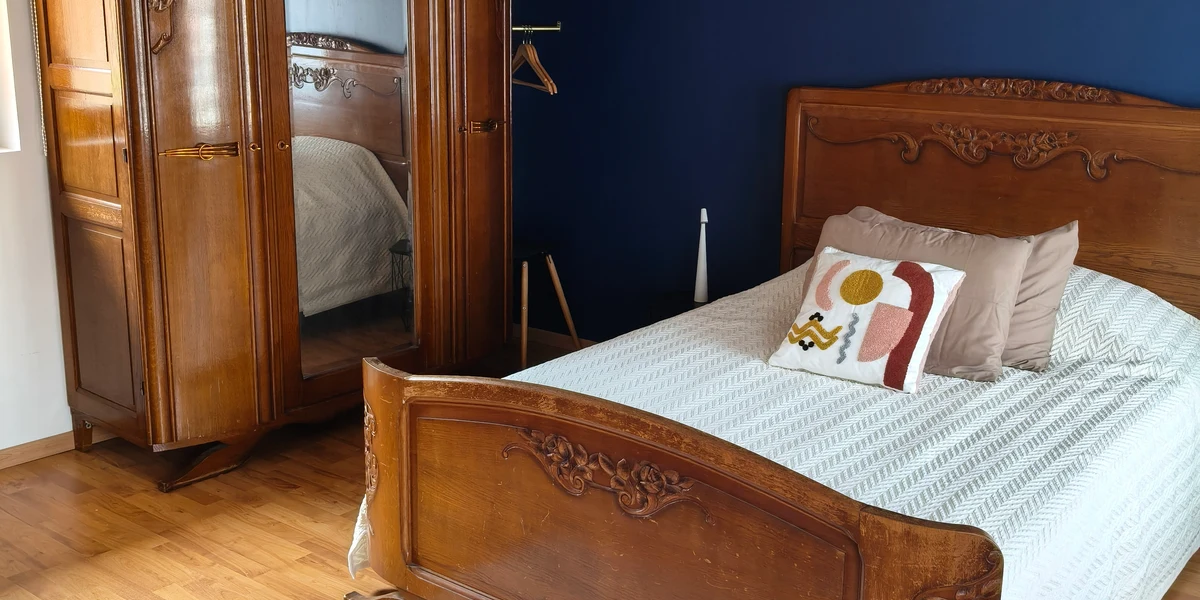
La table et le nid
B&Bno reviews
From €90/night1 - 3 guests
Griesheim Pres Molsheim – 67870

BAS-RHIN
Showing 1 of 1 accommodation
The Bivo Moto community is building the motorcycle accommodation map
Do you know a hotel, guesthouse or campsite suited for motorcycle travelers in this area? Share it and help other riders plan their next road trips.
Recommend an establishmentBas-Rhin is the Alsace you think you know until you've actually ridden it. From the Rhine plain around Strasbourg to the deep forests of the Northern Vosges, this department shifts its character with every valley. To the south, the Bas-Rhin stretch of the Wine Route winds through vineyards and half-timbered villages, from Marlenheim all the way to the Villé valley. To the west, the Bruche valley climbs gently toward the Col du Donon, while Mont Sainte-Odile and Champ du Feu throw some sharper switchbacks at riders who enjoy real technical riding. To the north, the Northern Vosges Regional Nature Park rolls out its pink sandstone and hilltop castles, nearly deserted off-season. The sweet spot runs from April to October, though summer weekends around Strasbourg and the Wine Route can get crowded, best avoided if you can.
Landscapes
Rhine plain → Northern Vosges
Best season
April to October
Wine villages
50 villages on the Wine Route
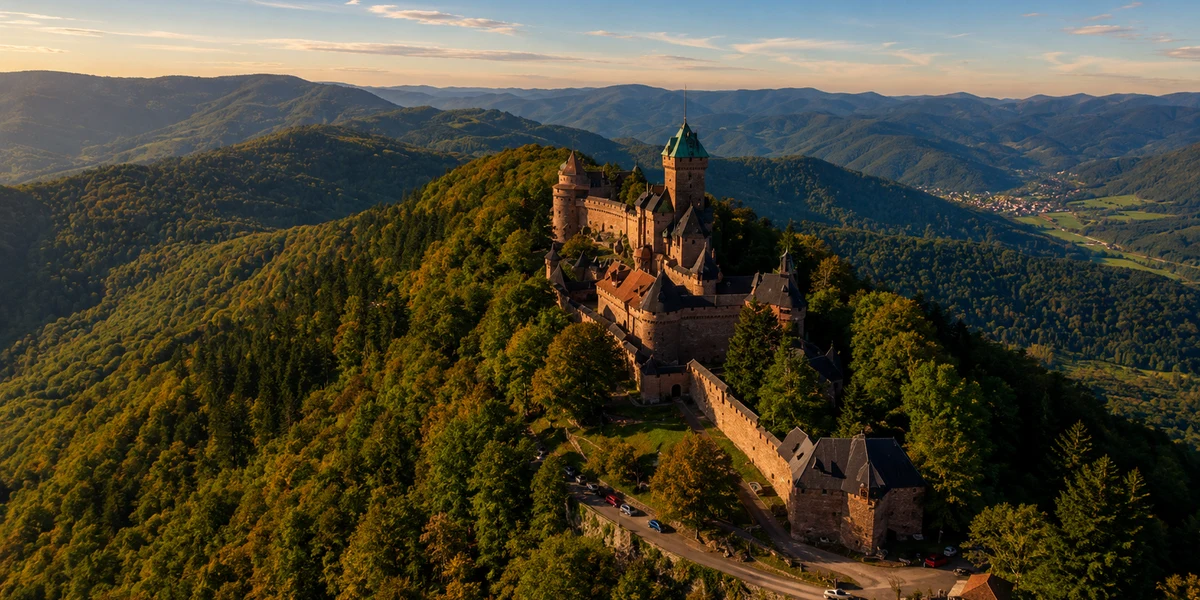
Strasbourg packs a full day's worth of must-sees: La Petite France and its canals listed as a UNESCO World Heritage Site, the Notre-Dame Cathedral and its Renaissance astronomical clock, and the Vauban Dam for that iconic view over the half-timbered rooftops. Heading south out of the city, Haut-Koenigsbourg Castle dominates the plain from its rocky peak : an unmissable stop before dropping into the vineyards below. The Alsatian Wine Route threads through Obernai, Barr, and Dambach-la-Ville, three fortified wine towns where it's hard not to pull over for a tarte flambée and a glass of riesling. Further north, Saverne and its Château des Rohan guard the entrance to the historic pass, while Wissembourg, right on the German border, keeps all its Alsatian charm without the crowds. The Northern Vosges Regional Nature Park hides away forgotten castles like Fleckenstein, perched on its sandstone crag, and the pottery village of Betschdorf keeps the salt-glazed stoneware tradition alive with workshops open to visitors. Sélestat, the book town, and the Romanesque abbey church of Marmoutier round out a rich religious and cultural heritage : impressive for a department that's actually pretty compact.
Historic neighborhood listed as a UNESCO World Heritage Site, with canals and half-timbered houses.
The second tallest cathedral in France, famous for its Renaissance astronomical clock.
17th-century sluice bridge offering an iconic view over La Petite France.
Restored 12th-century fortress with a sweeping panoramic view over the Alsace plain.
Monastery perched on a rocky spur, with a switchback climb that's a biker favorite.
Highest point in Bas-Rhin, with forests, peat bogs, and views over the Vosges massif.
Wooded valley connecting the Alsace plain to the Col du Donon, with smooth and shaded roads.
Mystical summit with a reconstructed Celtic sanctuary and 360-degree views over the Vosges.
The Bas-Rhin stretch between Marlenheim and the Villé valley, through fifty wine villages.
Fortified medieval town with a lively market square and well-preserved ramparts.
Wine town with a Renaissance town hall surrounded by vineyards.
Fortified village encircled by vines, with medieval gateways and half-timbered houses.
City of art and history, renowned for its Humanist Library inscribed on the UNESCO register.
One of Alsace's finest Romanesque facades and one of the oldest churches in the region.
Ruins perched on three sandstone spurs, nicknamed the eye of Alsace.
Episcopal castle and rose garden marking the historic entrance to the Col de Saverne.
UNESCO biosphere reserve with pink sandstone forests and scattered hilltop castles.
Cave castle carved into a pink sandstone crag, reached on foot through the forest.
Half-timbered Alsatian town on the German border, with the Lauter canal running through it.
Pottery village renowned for its blue and grey salt-glazed stoneware, with workshops open to visitors.
The Bas-Rhin stretch of the Alsatian Wine Route is the benchmark ride: the D1422 then the D35 links Marlenheim to the Villé valley over about thirty miles, rolling through vineyard slopes and fortified villages. For more engaged riding, the D426 climbs to Mont Sainte-Odile on tight switchbacks before connecting to Champ du Feu via the D57, an open ridge road with views across the entire Vosges massif. The Bruche valley is best ridden up the D392 to the Col du Donon via the D993, a wide forest road that flows nicely even late in the day. Up north, cutting through the Northern Vosges Regional Nature Park on the D3 and D653 strings together pink sandstone forests with detours to the castles of Fleckenstein and Lichtenberg : nearly traffic-free outside of July and August. The Col de Saverne, crossed via the D1004, is the historic gateway between the Alsace plain and Lorraine, with the Haut-Barr castle right in your sights. For a full loop, connect Strasbourg to Haut-Koenigsbourg via the D35 then the D159, a seamless blend of vineyards and sweeping views over the Rhine plain.
Marlenheim to the Villé valley, thirty miles of vineyards and fortified villages.
Tight switchbacks up to the hilltop monastery, a classic for Alsatian riders.
Open ridge road with sweeping views across the Vosges massif.
Wide, flowing forest road leading up to the mystical summit of the Donon.
Pink sandstone forests with detours to Fleckenstein and Lichtenberg castles.
Historic pass between the Alsace plain and Lorraine, at the foot of Haut-Barr.
A seamless run through vineyards with panoramic views over the Rhine plain from the castle.