
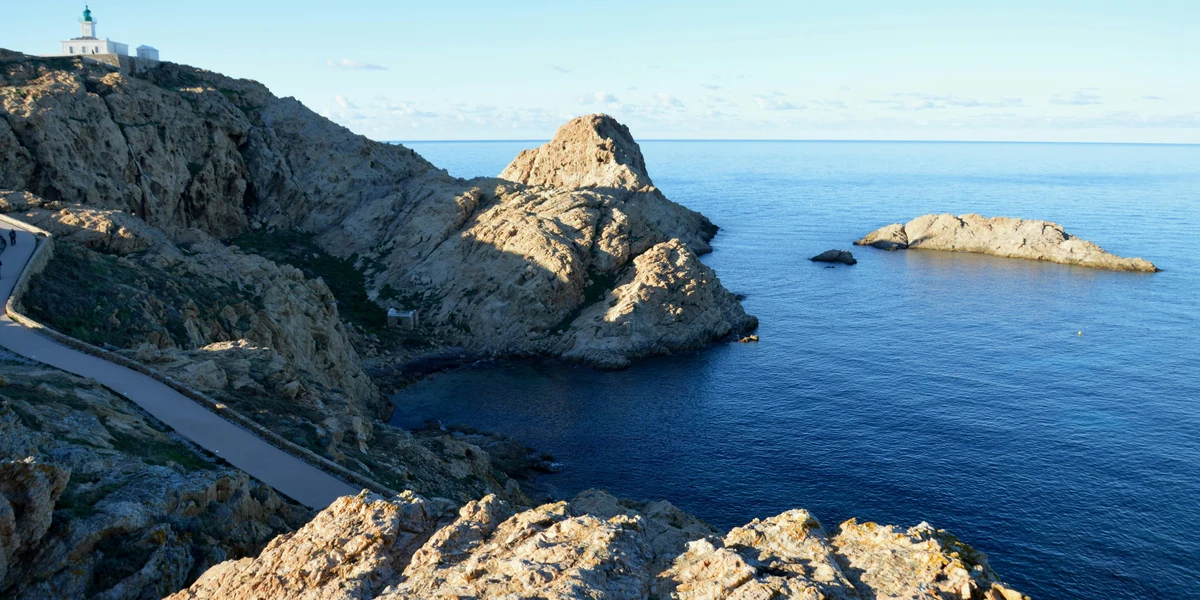
Corsica isn't just another motorcycle destination. It's an exceptional playground where every day in the saddle delivers landscapes that stay with you long after you've left. A rundown of the roads that are genuinely worth riding, with solid advice to keep you out of trouble.
Corsica plays in a league of its own. Here, the mountains plunge straight into the sea, the bends keep coming for hours without ever getting old, and the scent of the maquis finds its way right through your helmet. Packed into 8,700 km², the island has everything a rider could want: high-altitude passes, wild gorges, vertiginous coastal roads, timeless hilltop villages. Here are the roads worth riding, with real road numbers, distances, and the pitfalls to watch out for.
D81: The Calanques de Piana: 12 km of UNESCO-listed riding
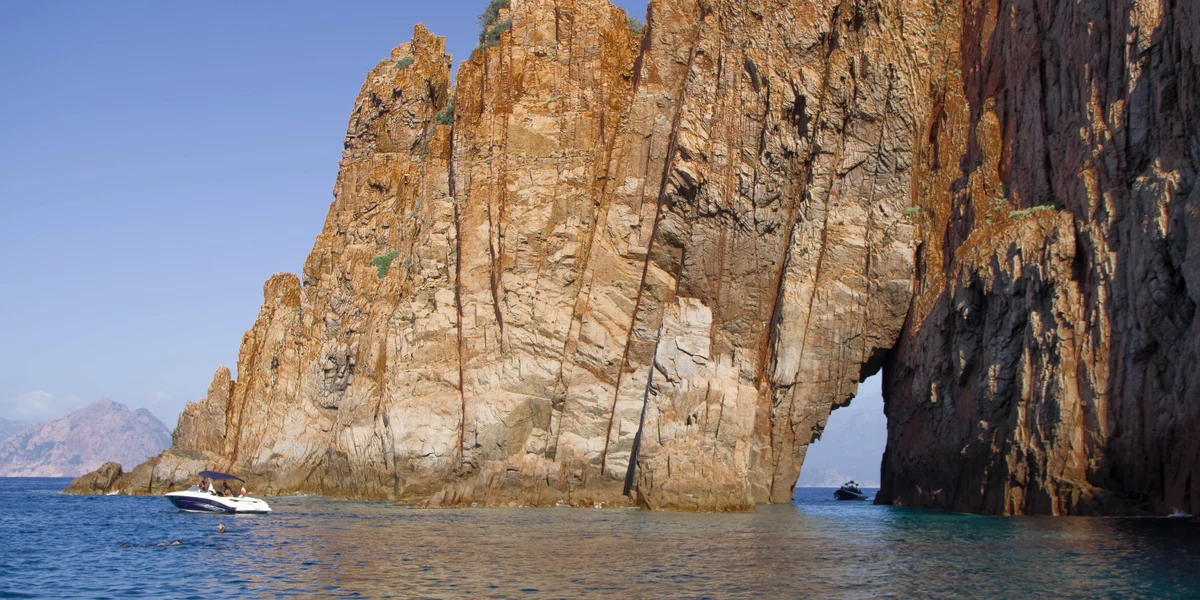
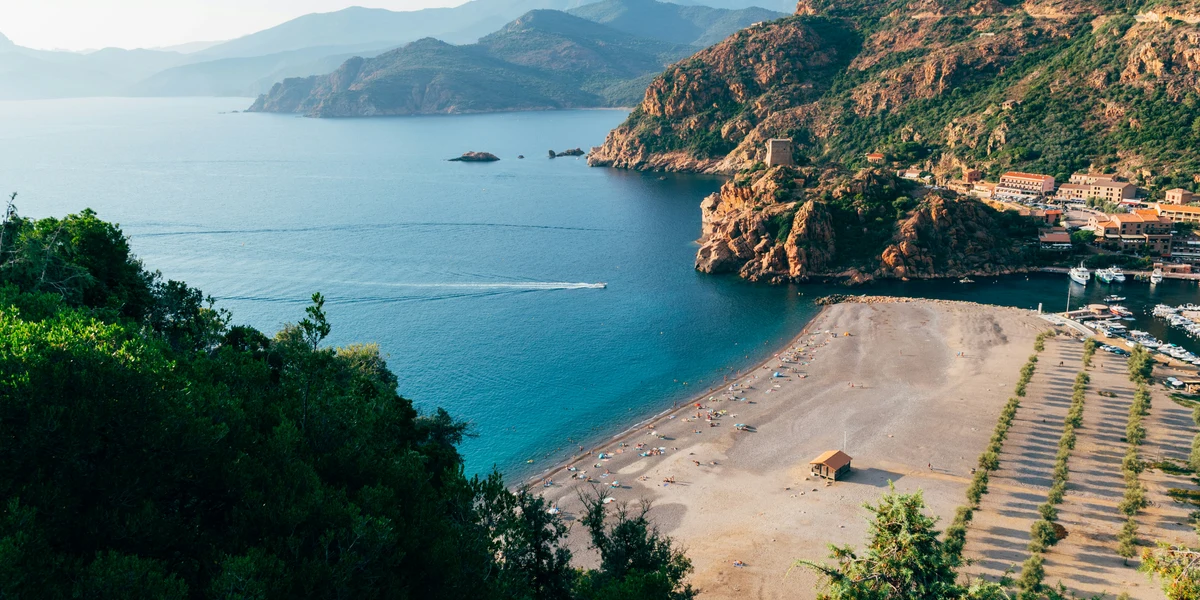
It's hard to find anything more spectacular. The D81 cuts through the Calanques de Piana over 12 km between Porto and the village of the same name. Listed as a UNESCO World Heritage Site, the sculpted granite cliffs shift from red to orange depending on the time of day, with the Mediterranean as a permanent backdrop. The road is technical, tight, lined with hairpins. Exactly what a rider is looking for.
The Capo Rosso viewpoint dominates the sea from 400 metres up, and the natural rock formation carved into the heart of the calanques is worth stopping for on its own. In theory, an hour's riding without stopping. In practice, nobody manages that.
📍 D81 in practice: Porto → Piana, 12 km, 20 to 30 min without stops. In
July–August, set off before 8am — motorhomes clog the bends from
mid-morning and the viewpoint car parks are rammed before 10am.
D268: Col de Bavella: 60 km and 1,218 metres of altitude
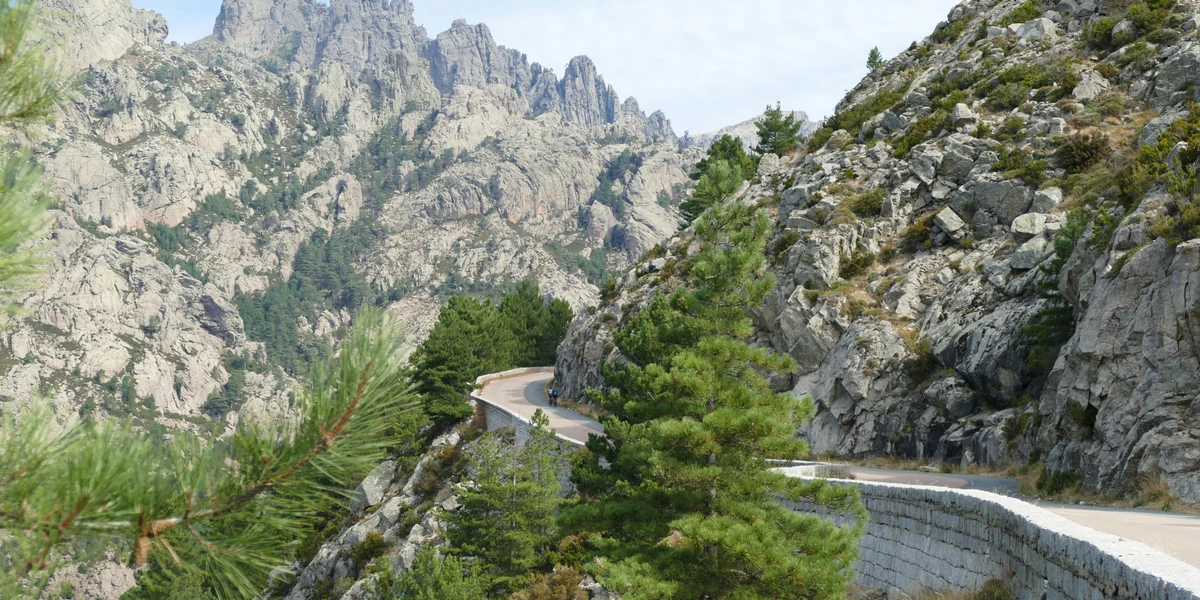
The D268 links Solenzara to Zonza via the Col de Bavella at 1,218 m. Sixty kilometres of pure mountain riding, with the seven granite needles of the massif as the undisputed highlight, rock blades slicing the sky in a way that's hard to shake. Laricio pines line the road for kilometres, and views of the sea appear out of nowhere around the ridgeline bends.
The Lac de l'Ospedale, roughly halfway, is a great excuse to catch your breath. The descent towards Zonza opens up onto the Alta Rocca villages, grey granite houses set high on the hillsides. From Zonza, a track leads to the natural rock pools of the Pulischellu canyon : the kind of spot the standard itineraries never mention.
D80: Cap Corse: 107 km around a world apart
107 kilometres of road hugging a finger of land pointing towards Italy, 2h40 of pure riding but a full day in practice. The D80 alternates between the east coast facing the Tyrrhenian Sea and the wilder, narrower, more demanding west coast. Villages cling to the mountainsides, Genoese towers punctuate the coastline, and on a clear day Tuscany reveals itself on the horizon.
Ride anticlockwise from Bastia, sea on your right. The west coast is tight in places, heavily loaded adventure bikes or sidecars should avoid certain sections. Macinaggio to the north or Centuri on the west side make good stopovers for splitting the loop over two days rather than one.
⛽ Cap Corse is as beautiful as it is empty of petrol stations. Fill up
completely in Bastia before you leave, no exceptions. Across all Corsican
roads, the one-third rule applies: never let your tank drop below a third
without actively looking for fuel. In the interior, stations close early
and can be 40 to 50 km apart.
D84: Scala di Santa Regina: where Corsica bares its teeth
The D84 carves into the Scala di Santa Regina gorges between Corte and Porto via Albertacce. Red granite towers on all sides, the road narrows at points to a corridor cut straight through the rock, with no crash barriers. No traffic, no noise, just the road and the walls. This is the island stripped raw, no filter.
Allow around 1h30 on uneven tarmac. Keep your speed down, your eyes up the road, and enjoy that rare feeling of having Corsica entirely to yourself.
⚠️ Cows, pigs and goats roaming free: it's a reality on every road in the
interior, and especially pronounced on the D84 early in the morning. These
animals cross without warning. Slow right down as soon as you spot any on
the verges, even at a distance.
D623: Gorges de la Restonica: 15 km of high mountain riding from Corte
From Corte, the D623 follows the Restonica gorges for 15 km. The river runs below clear and cold even in the height of summer and the natural rock pools at the Pont de Golo offer a break that few riders regret. The road climbs steadily towards the high-altitude lakes of Melo and Capitello. In peak season, alternating traffic is reserved for bikes and small vehicles: a rare perk that feels well earned.
Route des Sanguinaires and Capo di Feno — Ajaccio's hidden side
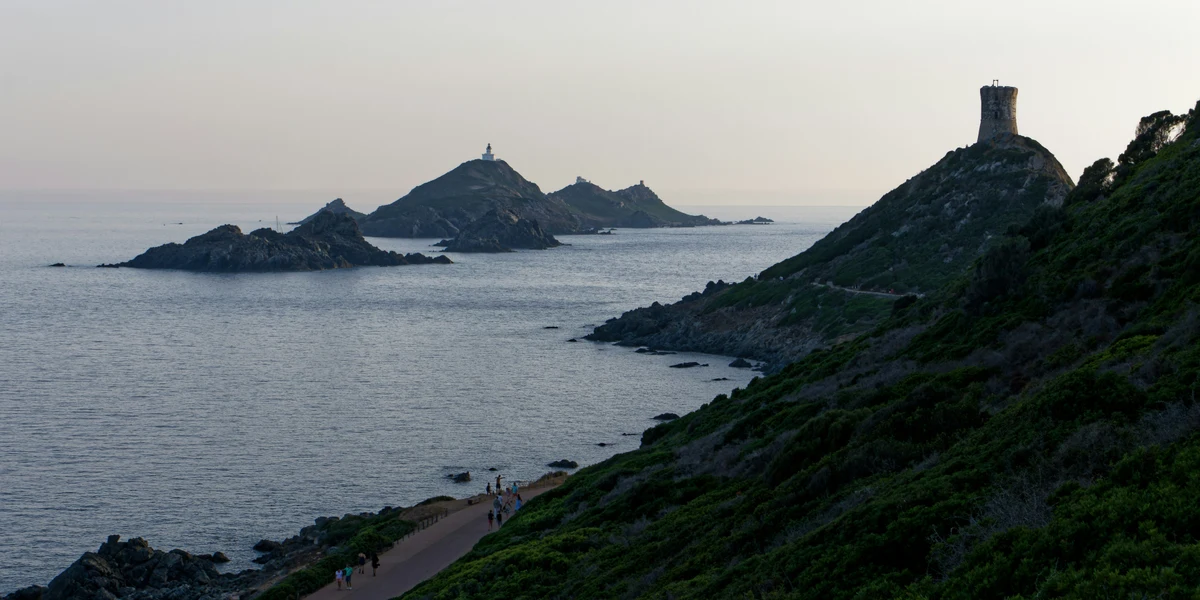
Two short rides from Ajaccio that deserve more than a passing glance. The Route des Sanguinaires (17 km, 30 min) follows the gulf out to the Pointe de la Parata: views over the islands it's named after, a lighthouse at the tip, and some of the most photographed sunsets on the island. The road to Capo di Feno (15 km, 32 min) winds through hamlets that don't register on most GPS units before arriving at a beach known only to locals: crystal-clear water, white sand, virtually empty outside of summer.
D71: La Balagne: 50 km to touch the soul of the island
The D71 connects Calvi to L'Île-Rousse over 50 km through the Balagne region. Less technical than the mountain roads, it passes through near-intact medieval villages : Pigna, Sant'Antonino where potters, weavers and knife-makers keep centuries-old crafts alive. Panoramas over the plain and the north coast unfold at every bend. The ideal road for understanding why this island inspires such loyalty in those who come back year after year.
The full loop: 7 days, 700 km
For those who want to take in the whole island, the full circuit can be done in 7 days for around 700 km.
The reference itinerary:
Ajaccio → Piana → Porto (Day 1 — 70 km) → Calvi → L'Île-Rousse (Day 2 — 115 km) → Désert des Agriates → Bastia (Day 3 — 70 km) → east coast → Solenzara (Day 4 — 105 km) → Porto-Vecchio → Bonifacio (Day 5 — 75 km) → Bavella → Alta Rocca (Day 6 — 145 km) → Taravu valley → Ajaccio (Day 7 — 90 km).
Everything the island has to offer, without compromising on a single thing.
What you need to know before you roll off the ferry
Your bike
- Tyres: check wear before you board. Corsican roads are demanding —
granite, gravel on corner exits, wet sections at altitude.
- Full service: bike workshops are scarce in the interior.
A mechanical problem in Zonza or on the D84 means at least a day lost.
- Thermal layers: even in July, a pass at 1,200 m can be 12°C.
A gilet in the panniers takes up no space and saves a world of suffering.
Planning
- Best time to go: May–June and September. Clear roads, bearable heat,
accommodation available.
- The ferry: Marseille–Ajaccio or Toulon–Bastia, 10 to 12 hours overnight.
Bike spaces are booked separately — limited and snapped up fast in high season.
- Panniers: waterproof or with rain covers. Mountain storms roll in fast
and without warning in Corsica.
Motorcycle accommodation in Corsica: the detail that changes everything
After a day on the D268 or through the Restonica gorges, leaving your bike in an unsecured car park overnight is the last thing any rider wants to do. Finding accommodation with a locked garage or secure parking in Corsica takes time if you don't know where to look.
Bivo Moto lists only addresses with secure parking or a locked garage, vetted by riders. Three ideal bases for a relaxed island tour: Corte for exploring the centre, Porto-Vecchio for the south and Bavella, Bastia for the north and Cap Corse.